busy girls are dropping manicures
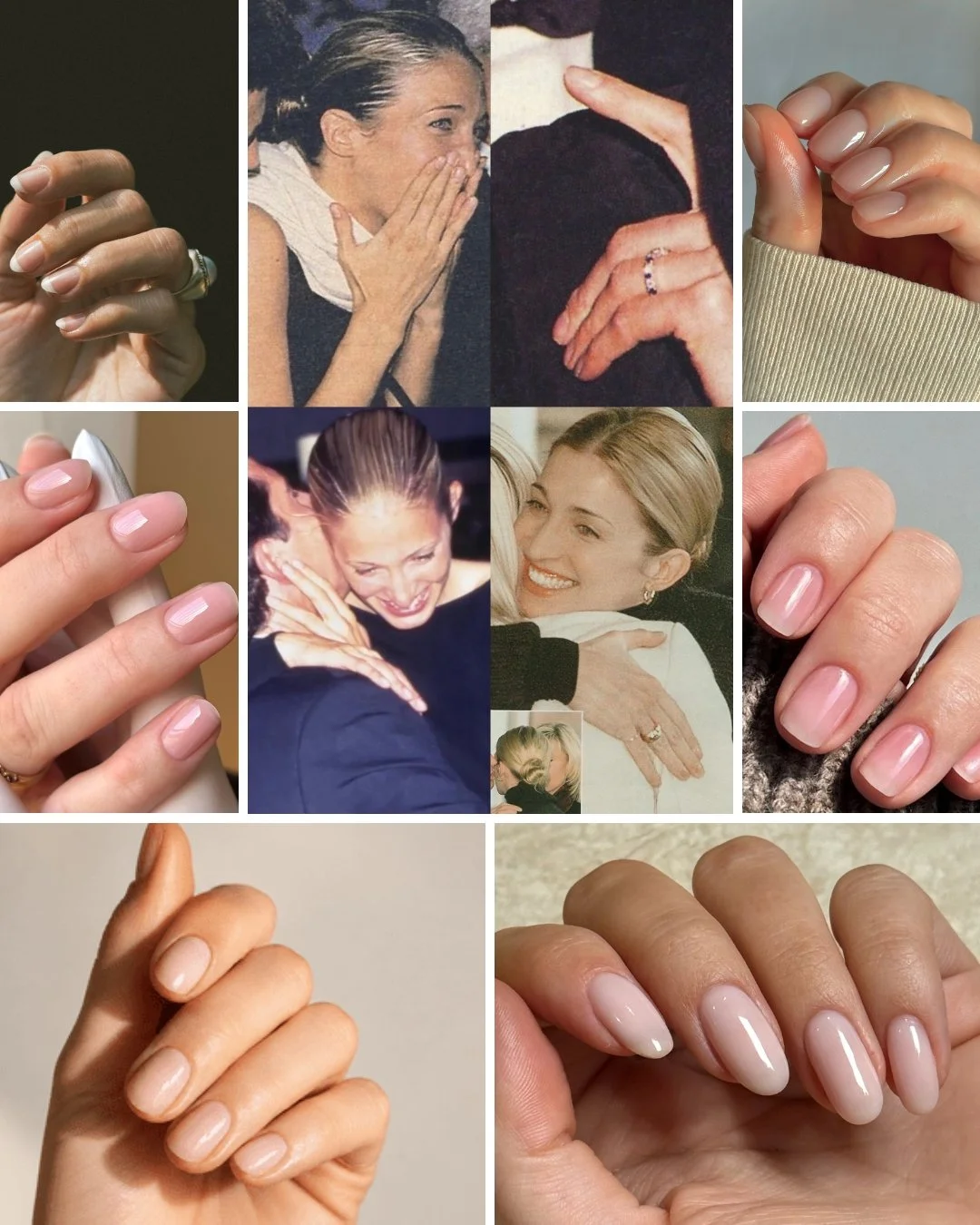
Busy girls are dropping traditional manicures. Is it recession-core, the Carolyn Bessette effect, or something more?
The most coveted nails on socials are looking shorter, softer, and clinically healthier. Right now, love it or hate it, beauty standards are becoming more biological. This era of looksmaxxing + optimization is training us to evaluate features according to their perceived proximity to health.
Among a growing subset of women, the new aspiration is having nails so naturally strong, smooth, and pink that ornate designs feel unnecessary. For other girls, bare just feels good. As health becomes aesthetic capital, physical excellence takes on new cultural value.
Other times, skipping the manicure isn’t a statement, it’s just a calculation.
Emma Grede illustrated this during her recent book tour. Faced with a packed schedule and competing beauty obligations, she explained that something had to give. Allocating time to cover her greys meant that manis were cut from the schedule. (For a fashion girlie, the rise of a bare nail aesthetic meant she still looked presentable.) Even at the highest levels of access, maintenance femininity still demands tradeoffs.
As discussed earlier, women are questioning the concept of maintenance femininity as a full-time operating system. Part of this change is practical. A manicure requires recurring appointments, mental administration, chemical exposure, plus a steady investment of time and energy.
In wellness culture, manicures are being reevaluated through a similar cost-benefit analysis.
Concerns about UV exposure, nail barrier damage, and cumulative wear have expanded from dermatology journals into mainstream beauty conversations. The more consumers learn about the tradeoffs of frequent nail treatments, the more their habits change.
The market is responding accordingly.
Press-on nails have emerged as one of the biggest winners in this evolving landscape so far. They offer consumers an option that feels fashionable, convenient, and less damaging than gels or acrylics.
Demand is also rising for cuticle oils, keratin treatments, strengthening serums, growth supplements, and repair focused nail care systems as consumers invest more heavily in nail health.
Services that position themselves as healthier alternatives are benefiting as well. Russian manicures and chemical-free Japanese salons continue to attract interest by promising longer lasting results without compromising nail integrity.
The implications of these changes extend beyond beauty and into adjacent categories.
The biggest beneficiary may not be the nail industry at all. It may be jewelry.
Minimal nails clear visual space, allowing jewelry to become the place where we express our individuality.
This helps explain our renewed interest in chunky rings, sculptural pieces, hand chains, and statement watches. Everything is connected, and attention has to go somewhere, bbs.
This creates major opportunity for jewelers, watchmakers, and accessory brands.
Enjoy this moment, artisans. ✨
(This is Part 2 in an ongoing conversation on the Generational Recalibration of Presentation. See Part 1.)